
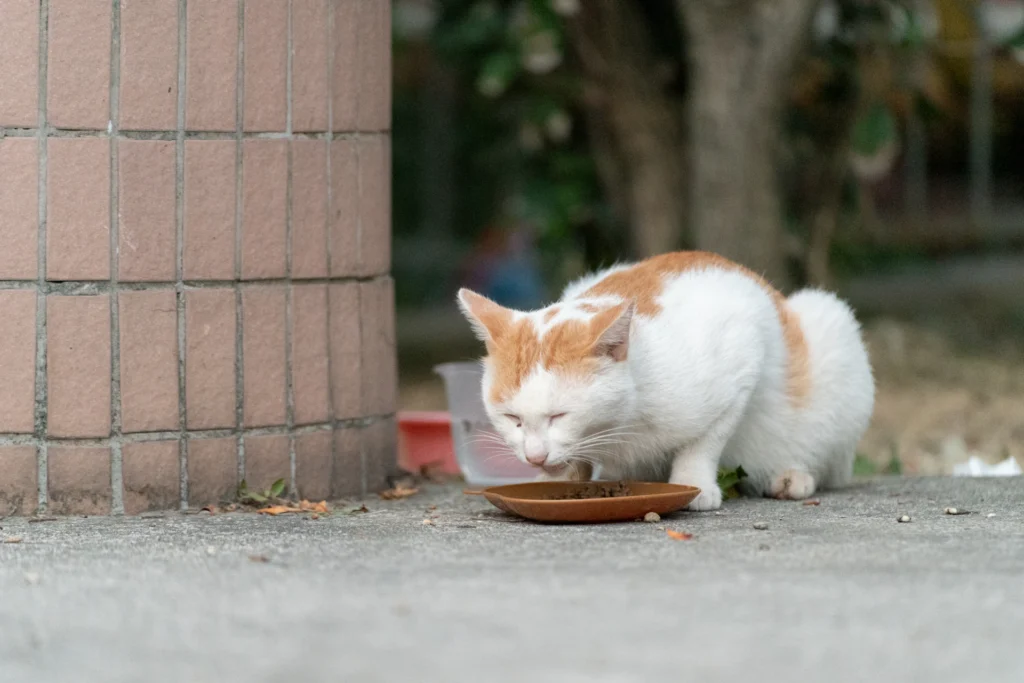
A ruling set to reassure thousands of volunteers who care for free-roaming cats every day. With judgment no. 27109, filed on 17 July 2026, the First Criminal Section of the Italian Supreme Court (Corte di Cassazione) ruled that someone who cares for a cat colony cannot be considered the keeper or custodian of the cats and, as a result, is not liable for their droppings.
The case
The case involved a volunteer who, since 2020, had been looking after a group of free-roaming cats living near her home. She did more than just feed them: she had modified her gate to let the animals come and go freely, and had personally paid for their neutering and veterinary care. In short, hers was a careful and responsible approach.
Following a complaint from a neighbour who was annoyed by cat droppings found in her garden, the trial court had convicted her in October 2025, fining her 200 euros and ordering her to pay damages for the offence of dangerous littering (Article 674 of the Criminal Code). According to the lower court judges, her decision to feed the cats effectively made her responsible for the animals and their “traces.”
The Supreme Court completely overturned this reasoning, quashing the conviction without remand.
What the Court says
The Supreme Court’s reasoning starts from the national framework law (Law 281/1991, on companion animals and stray animal prevention), which recognises and protects cats living freely: they cannot be mistreated or removed from their habitat, and are neutered by the health authority and returned to their group. Cat colonies are, by legal definition, groups of free-roaming cats living in a given area.
This status leads to a clear consequence: anyone who fills a bowl with food or water does not thereby gain any power of control over the animals, who do not lose their status as free-roaming cats. Caring for a colony is an act of solidarity, not a claim of ownership or custody.
The Court also ruled out any comparison with dogs, for which the law imposes strict custody obligations due to their potential danger: cats do not fall into that category, so there is no public safety risk to prevent.
A closer legal look
The offence at issue, dangerous littering (Article 674 of the Criminal Code), punishes anyone who throws or pours, in a place of public transit or a privately owned place for common use, things capable of harming, soiling or bothering people. When committed by omission, it requires that the defendant had a legal duty to prevent the event: the so-called duty of care position (posizione di garanzia).
This is the heart of the ruling. According to the Supreme Court, a duty of care position cannot arise from the simple act of feeding free-roaming cats, because the law itself (Law 281/1991 and regional regulations) defines these animals as living freely, ruling out from the start any relationship of custody. A second, decisive point is added: the droppings were found in a private, fenced garden, not in a place of public transit or common use, meaning one of the essential elements of the offence was missing.
The ruling marks a significant departure from an approach previously developed regarding stray dogs. With judgment no. 17145/2017, the Fourth Criminal Section had held that anyone who feeds and cares for stray dogs, even occasionally, takes on a duty of care position and is liable for injuries the animals cause to third parties, regardless of ownership in the civil-law sense. Judgment no. 27109/2026 clarifies that this principle cannot be applied to cats: a duty of care position presupposes a danger to be controlled and effective power over the animal — conditions that lawmakers have ruled out for free-roaming cats, whose status is protected by law.
A final clarification from the Court concerns the powers of municipalities. Municipalities retain the authority to regulate the feeding of animals in their territory for reasons of hygiene and the upkeep of public spaces: anyone who violates a mayoral order on the matter may face the administrative penalty set out in local regulations. However, if the order already provides for a specific administrative penalty, the violation cannot be turned into the criminal offence of failing to comply with an authority’s order (Article 650 of the Criminal Code): the offence remains administrative, not criminal.
A caution: hygiene and cleanliness duties remain
The ruling should not be misunderstood: it rules out liability for the natural, uncontrollable behaviour of the animals, such as their droppings, but certainly not for the conduct of the person who cares for them. Anyone who leaves food scattered on the ground, or abandons food scraps, dirty containers or decomposing leftovers is directly responsible for their own actions: here there is no free-roaming animal involved, but human conduct that creates mess and can cause hygiene and health problems.
Municipal regulations for animal welfare often spell out these duties in detail: providing food in suitable bowls or containers, removing leftovers once the meal is finished and avoiding wet food residue, keeping the colony’s area clean. Water, and where allowed, dry food, may instead be left available to the cats at all times.
Violating these rules can lead to administrative penalties, and in more serious cases, poor hygiene conditions may justify intervention by the health authority on the colony itself. In other words, improper feeding practices end up harming the very cats one intends to protect.
The protection recognised by the Supreme Court rewards the model of responsible volunteering — like that of the woman at the centre of this case, who had neutered and cared for the animals at her own expense — not the careless scattering of food around the area.
Why this ruling matters
Those who care for free-roaming cats perform a valuable role, recognised by law: they help keep cat numbers in check, support animal health, and limit births through neutering. All too often, though, this activity runs into neighbourhood tensions that escalate into complaints and reports to the authorities.
Judgment no. 27109/2026 now provides a solid point of reference: caring for a cat colony, within the rules, does not expose someone to criminal liability for the natural behaviour of the animals. It remains essential for anyone carrying out this activity to be familiar with the relevant national, regional and municipal rules: a guide to the most important rules on cat colonies is available in Animal Law Italia’s online magazine.